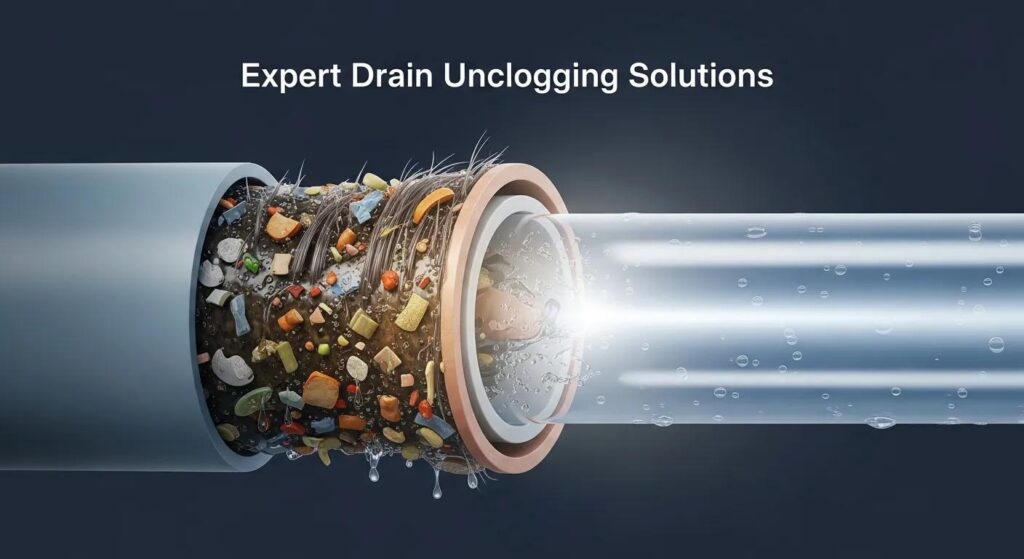
Expert Drain Unclogging – Safe, Dependable Results
Blocked drains are a nuisance most homeowners face – and the wrong fix can quickly turn into an expensive repair. This guide shows straightforward, safe methods to clear blockages while protecting your pipes. You’ll get practical mechanical and chemical-free options, clear advice on when to call in a professional, and eco-minded tips to keep your system working well long term. We also explain common causes of clogs and simple steps you can take to prevent them from recurring.
What are the safest drain-cleaning methods to prevent pipe damage?
The safest approach removes the blockage without exposing the pipework to harsh chemicals that can corrode older metal pipes. Start with mechanical tools or natural solutions that lift or dissolve the clog without damaging fittings. If a job is beyond DIY, a professional will use targeted techniques chosen to protect your plumbing.
How do chemical-free drain-cleaning techniques protect plumbing systems?
Chemical-free methods are kinder to pipes while still effective. Biological cleaners, for example, use enzymes and friendly bacteria to break down organic waste rather than attacking pipe material. They also cut chemical exposure for people and the environment, helping your drainage run reliably over time.
Which tools and practices ensure safe drain unclogging at home?
With a few simple tools and sensible habits, most minor blockages can be cleared without damaging the pipework. Focus on mechanical and biological options that reduce risk.
- Plunger: A basic, reliable tool for shifting small clogs in sinks and toilets.
- Manual Drain Snake: Reaches deeper blockages that a plunger can’t, letting you remove obstructions without stressing the pipes.
- Biological Drain Cleaners: Enzyme-based products that safely break down organic material and work well as a preventive measure.
Used correctly, these tools will clear routine clogs and help you avoid unnecessary repairs.
How Can Expert Drain-Clearing Services Protect Your Pipes from Damage?
A professional drain clearance uses trained technicians and specialist equipment to safely remove blockages. Experts diagnose the issue, pick the most appropriate method and apply techniques that minimise impact on your plumbing.
What expertise and equipment do professionals use for safe drain maintenance?
Professional teams bring inspection skills, proven methods and industry best practices to every job.
- CCTV Cameras: Let technicians inspect the interiors of pipes and locate blockages without excavation or intrusive work.
- High-Pressure Water Jetters: Flush away stubborn build-up effectively while being appropriate for most modern systems.
- Professional Drain Snakes: Heavy-duty tools that navigate complex runs and remove tough obstructions.
That combination of specialist kit and experienced plumbers ensures the job is done safely, quickly and with minimal disruption.
When should you contact a professional plumber for drain issues?
Calling a pro at the right time prevents further damage and bigger repair bills. Get an expert involved when DIY steps fail or when warning signs point to a more serious problem.
- Slow-Draining Sinks: Multiple slow drains often mean a deeper blockage in the system.
- Multiple Fixtures Affected: If several outlets back up at once, the main line may be obstructed.
- Persistent Foul Smells: Strong odours can indicate a significant clog or a sewage issue and need prompt attention.
Addressing these signs quickly helps protect your plumbing and avoids more costly work down the line.
What are the common causes of drain blockages, and how can they be addressed safely?
Knowing the usual causes makes prevention straightforward. Hair, soap scum, cooking fats and non-flushable items are common culprits – keeping them out of your drains cuts the risk of blockages.
How do different drain types affect unclogging approaches?
Different drains respond best to different methods. The location and cause of a clog determine the safest and most effective way to clear it.
- Kitchen Sinks: Often blocked by grease and food debris – hot water and biological cleaners usually help.
- Bathroom Drains: Commonly blocked by hair and soap scum – manual snakes or plungers are often the safest first move.
- Main Sewers: These blockages are complex and almost always require professional attention.
Identifying the drain type helps you choose the right method and reduces the risk of causing damage.
What preventative maintenance tips reduce the risk of damage?
Simple, regular checks and small actions cut the chance of blockages and protect your pipework.
- Inspect Visible Pipes Monthly: Spot leaks, corrosion or damp early to prevent bigger problems.
- Exercise the Stopcock: Turn it occasionally to prevent it from seizing and ensure it works when needed.
- Insulate Vulnerable Pipes: Protect exposed pipes from freezing in cold weather to avoid cracking.
These basic steps extend the life and reliability of your plumbing system.
Which eco-friendly drain maintenance practices promote long-term plumbing health?
Green maintenance protects the environment and supports lasting performance. Natural methods reduce reliance on harsh chemicals while still helping manage minor issues.
How do green plumbing solutions minimise chemical use in drain cleaning?
Green plumbing favours practical alternatives to corrosive chemicals. Simple mixes like vinegar and baking soda can help with small blockages, while biological cleaners use enzymes that are both pipe- and eco-friendly.
What are safe alternatives to traditional drain-cleaning chemicals?
Several safer options work well for everyday maintenance:
- Vinegar and Baking Soda: A natural combo that can loosen minor blockages.
- Salt and Hot Water: Helpful for breaking down grease and organic build-up.
- Biological Drain Cleaners: Enzyme-based products that clear clogs without harming pipes.
Choosing these alternatives lowers environmental impact and reduces chemical exposure around your home.
How to perform safe DIY drain cleaning without causing damage?
DIY drain cleaning is effective when you follow proven steps and use the right tools. A careful, measured approach keeps the risk of damage to a minimum.
What step-by-step techniques ensure effective and safe DIY unclogging?
Try these steps to clear many common clogs safely:
- Start with a Plunger: Make a good seal and use steady, controlled pressure to dislodge the clog.
- Use a Manual Drain Snake: Feed the snake into the drain and rotate to break up and remove the obstruction.
- Apply Biological Drain Cleaner: Follow the manufacturer’s instructions and allow time for the enzymes to work.
When applied correctly, these simple steps will clear many minor blockages while keeping your plumbing intact.
Which safety precautions should homeowners follow during drain cleaning?
Safety should guide every drain-cleaning attempt. Use the appropriate tools, identify the likely cause of the clog and stop running water if several fixtures back up. Kitchen plumbing is essential to consider during such tasks.
- Identify the Type of Blockage: Knowing whether the clog is hair, grease, or another material helps you choose the safest method.
- Use Safe Tools: Match tools to the job to avoid damaging pipes.
- Stop Using Water if Multiple Fixtures Back Up: This prevents further complications and possible flooding.
Following these precautions protects you and reduces the chance of causing further plumbing damage during DIY work.
What are the signs that indicate professional drain inspection is needed?
Spotting the right signs early means you can call a professional before problems escalate and save on repair costs.
How can early detection prevent costly plumbing repairs?
Early detection keeps repair bills down by dealing with issues such as slow drains or persistent odours before they worsen. Regular inspections and routine maintenance help spot faults early and extend the life of your kitchen plumbing system.
Conclusion
Using safe, damage-free methods protects your plumbing and supports long-term maintenance. Choosing eco-friendly options and hiring professionals for difficult jobs keeps clogs under control while reducing environmental impact. Watch for the signs that need expert attention, and consider our professional services to keep your drains flowing as they should.